
Defensibility starts with the records you create every day

When a question arises about working hours, pay, absence or timekeeping, an organisation needs more than a confident recollection. It needs a clear record of what happened, how a decision was reached and whether the same approach was applied consistently.

That is the practical value of defensibility. It is the ability to explain and support a decision using reliable information and a fair process.

Workforce records are created for practical reasons: to calculate pay, manage shifts, approve overtime and understand absence. But they can also become relevant when an employee raises a concern, a manager investigates an incident or the business needs to review how a policy was applied.

ACAS guidance says workplace investigations should be fair and objective, gather information from both sides and avoid starting from the assumption that someone is at fault. It also identifies attendance records and computer records as possible evidence in an investigation.

That makes the quality of routine records important. If information is scattered across paper timesheets, spreadsheets, emails and separate systems, it can take time to build an accurate picture. Gaps and inconsistencies can make it harder to explain what happened.

Everyday records can become important evidence

Workforce records are created for practical reasons: to calculate pay, manage shifts, approve overtime and understand absence. But they can also become relevant when an employee raises a concern, a manager investigates an incident or the business needs to review how a policy was applied.

ACAS guidance says workplace investigations should be fair and objective, gather information from both sides and avoid starting from the assumption that someone is at fault. It also identifies attendance records and computer records as possible evidence in an investigation.

That makes the quality of routine records important. If information is scattered across paper timesheets, spreadsheets, emails and separate systems, it can take time to build an accurate picture. Gaps and inconsistencies can make it harder to explain what happened.

Accurate time data supports better conversations

A clocking record on its own may not tell the whole story. Managers may also need to understand the shift that was scheduled, any authorised changes, approved overtime, an absence or a correction made to a record.
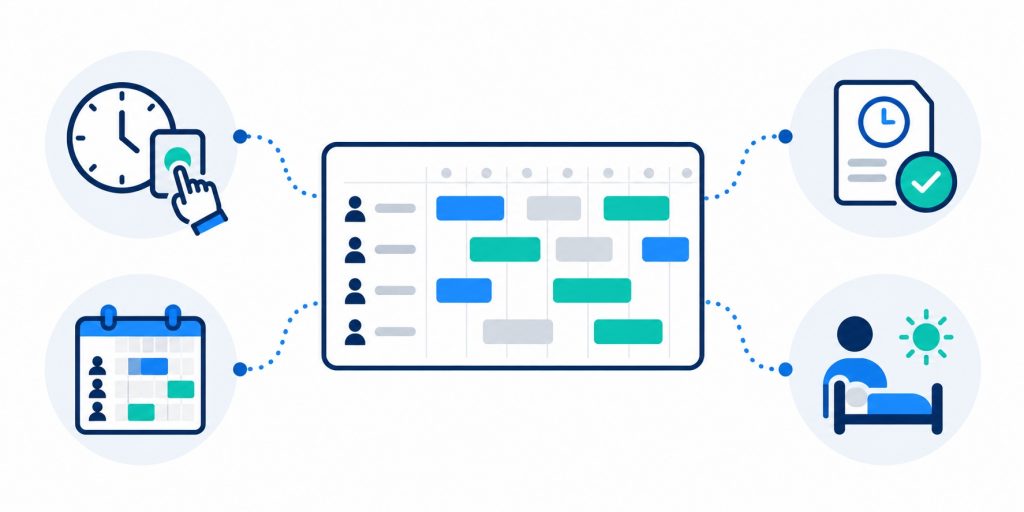
Bringing this information together helps managers ask better questions and respond to issues promptly. It can also help identify patterns in lateness or absence, while giving managers a clearer basis for a supportive conversation. ACAS recommends recording unauthorised absence and lateness, while also reminding employers to consider confidentiality, data protection and discrimination.

The aim is not to turn every minor discrepancy into a formal issue. It is to give managers dependable information so they can understand the circumstances and respond appropriately.

Records matter when pay is questioned

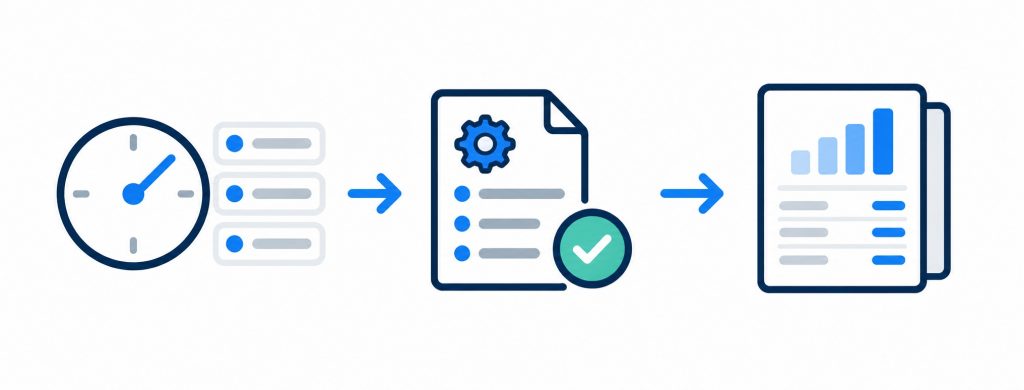
Working time records can also help explain how pay has been calculated. Government guidance on National Minimum Wage record keeping says employers need sufficient records to demonstrate that workers have been paid correctly. It recommends clear, consistent records that show working time and associated pay rates, and explains that the required detail can vary by worker and situation.

For organisations managing different shifts, overtime rates, allowances or working arrangements, it is useful to be able to see how recorded time connects to the rules used to calculate pay. That visibility can support internal checks and help the business respond to a query with relevant information to hand.
Consistency is part of a fair process

Good records are only one part of defensibility. Policies need to be clear, managers need to apply them consistently, and employees need an opportunity to explain their circumstances. Where a concern is investigated, relevant evidence should be reviewed fairly and kept confidential.

A system can help make information easier to find and apply. It cannot make a decision fair on its own. The process still depends on people using the information thoughtfully and following the organisation’s procedures.

Building a clearer workforce record

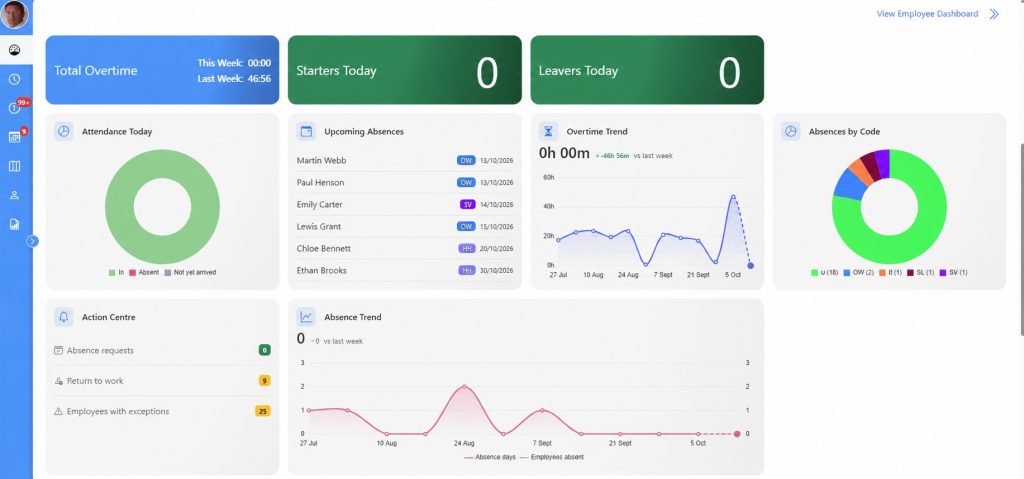
Ceequel Time & Attendance brings together clockings, shift information, absence and overtime within a configurable workforce system. Managers can review exceptions and approvals through Ceequel Hub, helping them see relevant information in one place and deal with issues in a more timely way.

For organisations, that can mean less time piecing together records and more confidence in the information behind workforce decisions.
Defensibility is not created when a problem appears. It is built through accurate records, clear policies and consistent decisions made every day.

The Fair Work Agency: Why Accurate Working-Time Records Matter More Than Ever

The way employment rights are enforced in the UK is changing.

Established in April 2026, the Fair Work Agency brings several previously separate enforcement functions into one organisation. Its responsibilities include National Minimum Wage enforcement, tackling labour exploitation and recovering unpaid wages, with its remit expected to expand progressively into areas covered by the Working Time Regulations.

For employers, this increases the importance of having accurate, accessible and consistent workforce records.

Could you prove the hours your employees worked?

When questions arise over pay, overtime, holiday entitlement or working hours, relying on spreadsheets, paper timesheets or managers’ recollections can leave a business exposed.

A modern time and attendance system creates a reliable record of:

  • When employees started and finished work
  • Breaks taken during the working day
  • Overtime and shift premiums
  • Holiday and absence
  • Working Time compliance
  • Authorised changes and manager approvals

Good records do more than support compliance. They also reduce payroll errors, prevent disputes and give managers a clearer understanding of staffing costs and working patterns.

Compliance should be built into everyday processes

The strongest compliance systems are not additional administrative exercises. They form part of the organisation’s normal operation.

Ceequel® Time and Attendance automatically applies each organisation’s working rules to the hours recorded by employees. It can manage complex shifts, overtime, premiums, annualised hours, flexitime, TOIL and absences, while creating a clear audit trail for managers, HR and payroll.

As employment enforcement becomes increasingly coordinated and evidence-led, the ability to retrieve dependable workforce information quickly could become just as important as having the correct policies in place.

The question for employers is therefore no longer simply, “Are we paying people correctly?” It is also, “Can we demonstrate it?”

Discover how Ceequel® Time and Attendance can help your organisation manage working hours, pay rules and workforce compliance.

Responsible Workforce Technology: Better Information Without Losing Employee Trust

Workforce technology gives organisations unprecedented visibility over working time, attendance, access, absence and operational performance. Used correctly, it can improve payroll accuracy, reduce administration, control labour costs and help protect employees. Used without clear safeguards, however, the same technology can create legitimate concerns about privacy, fairness and excessive monitoring.

Responsible workforce technology is not about collecting as much employee information as possible. It is about using the right information, for a clearly defined business purpose, with appropriate security, transparency and human oversight.

This distinction is becoming increasingly important. The UK Government is currently considering how workplace-monitoring technologies should be managed, with a particular focus on clarity, transparency, employee voice and responsible implementation. This is a consultation rather than final legislation, but it gives employers a clear indication of the direction in which expectations are moving. Read the Government’s workplace-monitoring consultation.

Workforce technology should have a clear purpose

Every workforce system should begin with a legitimate operational requirement.

An employer may need to record attendance so employees are paid accurately, manage access to restricted areas, confirm who is present during an emergency, monitor working-time compliance or understand the labour used on a particular job or production process.

These are valid business purposes. Problems arise when information collected for one reason is subsequently used for an unrelated purpose without proper consideration, communication or justification.

Before introducing any workforce technology, an organisation should therefore be able to explain:

  • What information will be collected.
  • Why that information is required.
  • How it will be used.
  • Who will be able to access it.
  • How long it will be retained.
  • Whether it will contribute to any automated decisions.
  • What choices or alternatives are available to employees.

Transparency creates confidence

Employees should not have to guess how workplace technology affects them.

Clear communication helps employees understand that a time-and-attendance system is there to create accurate records, that access control protects people and premises, or that operational data is being used to improve production rather than simply scrutinise individuals.

Where appropriate, employers should consult employees and their representatives before new technology is introduced. This provides an opportunity to explain the business requirement, answer questions and identify legitimate concerns before implementation.

Transparency is particularly important where technology involves location data, biometrics or detailed operational information.

Biometric technology requires additional care

Facial recognition can provide fast, contact-free and highly accurate employee identification. It can reduce forgotten credentials, discourage “buddy clocking” and support secure access control.

However, biometric information used to identify a person is special-category personal data. The Information Commissioner’s Office states that organisations must complete a Data Protection Impact Assessment before processing biometric data to identify workers.

Employers must also establish an appropriate lawful basis, demonstrate that the proposed use is necessary and proportionate, and consider whether a less intrusive alternative could achieve the same objective.

Where consent is being relied upon, employees must have a genuine choice. The ICO gives the example of providing a swipe-card alternative without disadvantaging employees who do not wish to use biometrics. Read the ICO’s guidance on biometric time and access control.

This does not mean that facial recognition cannot be used responsibly. It means that the organisation introducing it must make a considered and properly documented decision.

Collect only what is needed

A responsible system should allow organisations to configure technology around their actual requirements rather than forcing them to collect unnecessary information.

For example, a mobile employee may need to confirm that they have arrived at an authorised work location. That does not automatically mean their movements need to be continuously tracked throughout the working day.

Similarly, operational technology may need to record which employee completed a job or production operation, but this should not become unrestricted personal surveillance.

The principle is straightforward: collect the information needed to achieve the defined purpose—and no more.

Important decisions should remain subject to human oversight

Workforce systems can identify exceptions, highlight patterns and provide managers with better information. They should not remove appropriate management judgement.

An attendance pattern may require investigation, but the system will not necessarily understand the personal or operational circumstances behind it. A productivity variance may identify a problem, but it may have been caused by machine downtime, material shortages, training requirements or an unrealistic production target.

Technology should support fair, consistent and informed decisions. Managers should remain able to review the underlying information, correct errors and consider the wider context before action is taken.

Security must be designed into the solution

Workforce information must be protected throughout its lifecycle.

This includes appropriate access controls, encryption, secure communications, clearly defined administrative permissions, retention policies, audit trails and reliable deletion processes. Remote access should also be controlled, authorised and restricted to the systems and time periods genuinely required.

The organisation using the system remains the data controller and is responsible for determining why and how employee information is processed. The technology provider should support that responsibility through secure design, clear documentation and configurable controls.

The Ceequel® approach

Ceequel® brings together Time & Attendance, HR, Employee Self Service, Access Control, Visitor Management, mobile clocking and Operational Intelligence within one configurable software suite.

This allows organisations to establish consistent controls across workforce processes while maintaining clear distinctions between different types of information and their intended purposes.

Depending on the organisation’s requirements, Ceequel can support:

  • Facial recognition or non-biometric proximity credentials.
  • Defined user roles and administrative permissions.
  • Accurate time, attendance, absence and working-hours records.
  • GPS and geofenced mobile clocking for authorised locations.
  • Controlled access to buildings and restricted areas.
  • Interactive fire and evacuation information.
  • Job, operation, output, downtime and labour-cost analysis.
  • Audit trails supporting management and compliance requirements.
  • Integration with payroll, HR and wider business systems.

The communications software used within Ceequel clocking devices is designed and coded by ELF Productivity Ltd, providing secure, encrypted communication between hardware and the Ceequel software environment.

Crucially, Ceequel provides information to authorised managers; it does not replace their responsibility to make fair, proportionate and properly informed decisions.

Better control and responsible use belong together

Organisations do not have to choose between operational visibility and employee trust.

A well-designed workforce-management system can help employers control labour costs, improve payroll accuracy, manage compliance and make better decisions while still respecting privacy, proportionality and individual rights.

The strongest workforce technology is not simply the technology that collects the most information. It is the technology that gives an organisation the information it genuinely needs, protects that information properly and enables it to be used openly, fairly and responsibly.

To discuss how Ceequel® can support responsible workforce management across your organisation, contact ELF Productivity Ltd or request a demonstration.

Even Superman can have an off day!

Even superheros have off days but with a time and attendance system not only can superman’s absence be tracked but a replacement with the correct skills can be easily found to take his place whilst he recovers. Implementing a time and attendance system into your organisation would work in the exact same way.

superman Infographic

Absence Management – “Anyone know where Bob is?”

Knowing exactly how many absences and holiday days each of your employees have had is key to the successful running of your organisation. Not knowing which of your staff is in the office at any one time could have substantial problems for your organisation especially if it leads to departments being under staffed.

Absence Management

Keeping track of your employees absences – whether it be holidays, medical reason or sick days can be a difficult task for any organisation, especially if there are no set processes in place to do so.  Not knowing who’s in at any one time can cause major disruptions to departments or even productivity. Employees who have a busy workload themselves are sometimes asked to take on even more work to assist with that of an absent employee.

Absence Management Software

Introducing absence management software into your organisation can drastically help manage your entire workforce. Mangers can access individual employee data in real-time, at the touch of a button.  Employee clock in data, absences and holiday information is all stored within the one easy to use system.  Managers have full access to every employee’s holiday calendar allowing them to view who’s off on which shift at what time. This information allows them to monitor and identify when agency staff need to be called in to cover. This also provides managers the ability to ensure your facility is staffed adequately in order to avoid any disruptions or fall in production. All employee clock-in data is also stored within the system allowing managers to identify at the earliest opportunity when an employee is absent.

A number of customised reports can also configured to run automatically, within the absence management system.  Employers can customise reports to flag up any employees with a significantly high absence rate or initiate triggers specific to your company KPI’s. Line managers are then able to monitor and interact with employees immediately.  Absence reports can also be customised based on days, weeks or months. The system will even report on an employee who has called in sick and identify if a holiday request for that day was previously submitted and rejected.

Absence management however doesn’t have to just be something an employer does. By giving your employees access to their own data they can take control of their own clocking in and attendance records. CEEQUEL Employee self-service provides your employees with access to their own personal data. Employee can view their current and weekly time cards, view absences by day or week basis and update personal information such as next of kin and emergency contact. Employees are also able to view any planned of taken holidays and send out holiday request to be approved by their line manager. Employee self-service also lets employees who work shifts view their weekly working pattern. The system is username and password protected, and can be customised to only show the information you want the employee to see.

For more information on how an absence management system can help your organisation better manage your workforce contact us today!

Stress related absences can harm your business

Employee absence rates related to stress can be a real headache for organisations. Stress related absences often last longer than normal employee absences meaning a high number of tasks have to be passed on to other employees. Most stress related absences can often be avoided through the implementation of certain processes.

Employee absences can be a real drain for organisations. Not only do absences cost money but long term absence can have a lasting impact on employee workloads. The number of Employees taking time off work due to stress is becoming ever more prominent within all companies.

A survey carried out by CIPD shows the eighteen most common causes of stress at work. With Two-fifths of the organisations surveyed reporting an increase in stress-related absence over the past year.  Workload was the highest common cause of stress within all sectors but affected public and private sector organisations the most.  Employers within the manufacturing and production industry found that management style and issues at home were equally to blame for the high number of stress related absences. Non-profit organisations found that thirty seven percent of employees were stressed due to having in-work relationships. Poorly handled organisational changes had a higher effect on public sector organisations than all others.

(Click to enlarge image)

Stress at work

Some cases of employee absence, due to stress, could easily be avoided. Setting up procedures in the workplace to assist employees effectively manage their workload, could help massively reduce employee absence rates. Communicating organisational change (e.g. office moves, department shake ups) to employees at the earliest opportunity helps them to plan ahead, instead of last minute surprises which can often lead to stress.  Allowing employees to work flexible hours when needed is one of the easiest ways to reduce absence rates and improve employee morale.

Office romances can often cause problems for organisations when it comes to absences. Relationships within the workplace that end badly often see the employees involved having to take time off work due to emotional stress or because they want to avoid their colleagues. Some organisations include a workplace romance policy into their company guidelines. The policy is often introduced to deter employee romances with work colleagues as businesses see them as a major disruption to the workplace.


Time and attendance for business and the available access control solutions

Organisations have been using time and attendance systems as a means to track employee clocking data for over 20 years. Old card based systems were slow and unreliable and as technology advanced new cutting edge real time systems took there place. Employees are no longer limited to how they can clock as most systems now come with a range of different options. The introduction of biometric and proximity technology now means that clocking can be completed in a number of seconds.

Access Control

Time and attendance within a business is not a new concept. Organisations have been using paper cards as a means of clocking employee working hours since the 20th century.  The problem with using a paper card system is that it’s extremely unreliable. Paper is easily lost and even if the card remained safe there was never any way of knowing if the times written on the sheet were accurate. This caused major problems for companies when it came to payroll, meaning employees were often over or under paid. An employee who has been under paid is less likely to work to their full potential meaning productivity levels in the work place often drop. Low productivity levels and overpaid staff can lead to organisations losing out on thousands a year.

As times changed and technology advanced so did the type of systems organisations use to track their employees time and attendance data.  Electronic automated clocking systems now record accurate employee data in real time. As data no longer needs to be manually imputed human resources departments are able to focus on more pressing tasks.

The benefits of having a fully functioning time and attendance system

The main benefit for a company which uses a time and attendance system is that the data being collected always remains accurate.  As all employee clock-ins are collected through an electronic system, the chances of fraudulent clocking is significantly reduced.  Employee time-thefts are also reduced as clockings can be completed via an IP based clock device, over a browser and even through a mobile device.  This allows employees to clock from any location whilst on the go. Notifications can be set up within the system to alert managers when staff clock late or leave early. These alerts inform an employer of attendance issues at the earliest stage.

Companies who implemented punch card systems often became victims of ‘buddy clocking’. Employees would often clock in for their “colleagues” when they were perhaps running late or had opted to take a longer break than allowed.  Almost all time and attendance systems available today, come with technology which can make it impossible for an employee to clock as anyone but themselves.

Human resource departments are at the forefront of any business. It manages all employee data and ensures that all information they have remains correct and up to date.  The underlying issues surrounding this is that manually checking and manipulating data can be time consuming and extremely costly.  Data collation and maintenance rapidly drains the resource available in most HR departments, meaning that information is often neglected or mislaid.  Any dynamic software solution should combine both Time & Attendance and HR System within one scalable database.

One database means the eradication of double keying information as data entered is immediately filtered throughout the system.

Most now come equipped with employee self-service (ESS) capabilities which provides employees with an easy-to-use web based interface allowing them to update their own personal data, without needing to contact their HR department.  Employees with access to ESS can also view information relating to their shift patterns, holidays – requested, planned or taken, together with full information on their weekly clockings and pay premiums.

Employees are able to request holidays or absences using employee self-serve and any absence requests are forwarded to their line manager for approval. Once a request has been accepted it is automatically imputed into the employee’s calendar, removing any need for the employee to contact HR.

Implementing an automated time and attendance system can also help a business’s stay on the right side of any legislation. Manual systems make it difficult for companies to track things such as overtime and overall hours worked. Both have high legal requirements that if not obeyed can lead to an employee perusing corrective action via an employment tribunal.

The available Access control solutions

Over the years, the number of Time & Attendance systems available to businesses has significantly increased.  Advancing technology is often utilised by the companies who manufacturing T&A systems creating a wider choice of cutting edge systems.  Each system is designed with its own capabilities and can permit access to employees in a number of different ways.

Biometric systems

Biometric access control systems are becoming ever more popular. These technologies offer cutting edge opportunities – look impressive to visitors and because they rely on unique employee features time-theft is completely eradicated.

Fingerprint biometric Time & Attendance units are the most common systems implemented into companies as they now have a 99.9% accuracy rate.  As Time & Attendance systems act as one big database, information collected on one terminal, is automatically passed through to all the other terminals within the business. This provides employees the ability to clock at any terminal within the building.  Facial recognition software works in exactly the same way.  Once enrolled, template information is distributed automatically throughout the company’s device estate.

Most Time & Attendance systems can be integrated with an access control unit. Businesses with an integrated access control and Time & Attendance system, are able to restrict access on a door-by-door basis, making sure that only authorised employees gain access to sensitive areas. Access can also be restricted by date and time allowing companies to lock down their business premises over festive periods, during bank holidays and after working hours.

Proximity technology

Proximity access control systems have always required an employee to swipe their access card in order to clock. The processes of swiping a card however can be time consuming.  Employees in a busy environment often swipe their cards too quickly for a system to recognise who they are, forcing them to slow down and problems begin as ques start to form into the building especially at busy periods of the day.

As Proximity technology advanced – so did the systems and options available. The invention of contactless technology now means that access control cards and fobs are designed to permit access without the need to swipe. An employee simply needs to hold their card up to the device in order to gain access or register a clocking.

Intercom and integration with VOIP

Intercom systems have been the chosen solution for granting visitor access into buildings for a number of years.  More often than not, they come with audio capabilities but as costs decrease, more are being installed with both audio and video capabilities.

As companies move towards a combined VIOP infrastructure, external intercom can now be fully integrated with your VIOP telephone system, providing full control of your external access points to any extension on your telephone system.

Barrier automation and turnstiles

Automated barriers or turnstiles now provide control to companies of who has access to your perimeter, company carpark, warehouses or any other company land.

Securing the first point of access to your organisation adds an extra level of security when protecting your business. Both barriers and turnstiles can be configured to only allow access to registered employees within your company’s Time & Attendance database.  Access can be granted using biometric or proximity technology and time profiles can be set up in order to stop people from accessing the premises outside of working hours or on certain days.

There are a number of different types of barriers available including sliding gates, ground mounted bollards and rising arm barriers.  Turnstiles are also available for both internal and external applications and are usually configured with anti-pass-back technology.

For more information on what a time and attendance system is, the benefits it could have on your business and the available access control systems, contact us today!


Automation of manual time sheet processing with Time and Attendance

Manual time and attendance processes can be costly to an organisation they are also difficult to handle. Many employees are unreliable with the data they submit which can in turn lead to problems with payroll leaving organisations at risk of paying their employees wrong. Implementing the Ceequel time and attendance system easily records accurate data on how many hours each member of your workforce has completed.

Timesheet

Managing employee time and attendance data is a difficult task for many businesses especially if the process is still manual.  Employees often fall behind in the completion of their time sheets and most can never remember the exact time they started and finished work, meaning false data is often entered.  This means many organisations risk under or over paying their staff and Issues involving payroll can often lead to a reduction in productivity levels.

An automated time and attendance system easily collects and tracks your employees clocking information.  Data is collected and stored in real time allowing mangers to access employee time on the go.  Employee absences and holidays can also easily be tracked making sure the appropriate amount of pay is given for each occasion.

Integrating your time and attendance system with payroll can significantly Increase the accuracy of your payroll processes.

chart 1

According to a survey carried out by the Aberdeen group organisations that had an integrated time and attendance system with payroll, benefited from a 30% lower rate of payroll processing errors. Theses organisation also saw a 32% lower error rate in the tracking of actual employee time worked, and also avoided the 6% year over year increase in manual workforce transactions experienced by organisations that didn’t have an integrated system in place.

Having an integrated payroll system can also save your company time as it eliminates time-consuming processes such as the manual calculating of time-sheets, meaning your human resource department are free to work on more strategic duties such as increasing workforce productivity.

Elf productivity’s Ceequel software suite acts as one fully integrated system allowing you to easily manage your time and attendance data as well as your payroll operations from one platform. Data is transferred between the two modules in real time meaning information is always kept up to date.

For more information on how you can integrate your payroll system with Ceequel time and attendance, contact us today!

Short term absence and the impact it can have on a business

Short term and long term absences are often a real problem for organisations as they leave them short staffed and over worked. In the case of a long term absence employers often find themselves having to contract in agency staff in order to cope with the growing workload. Short term absence however is harder to deal with as contracting staff in for the odd day or two can be costly.

long or short term

Short term absences are very disruptive to an organisation, with many managers often having to scramble around looking for cover, which on occasion is not readily available.  This can leave organisations short staffed and lacking expertise.  Long term absences however have the opposite effect on businesses as they can be easier to manage.  The tasks that would normally be completed by an absent employee will often be split up and passed onto other members of the team, or agency staff could be recruited to cover the absence period.

Most long term absences are covered under the Equality act 2010, so employers need to make sure they are complying with all legislations.  Keeping a note of all employee absence records throughout their illness is crucial and this information needs to be kept secure at all times.

Elf Productivity’s Ceequel® software suite provides your Human Resource department with a secure way of easily recording every employee absence.   Just by virtue of the fact that an employee has not clocked using Ceequel® Time and Attendance, the system will know the start day, end day, number of working days absent and the category of absence.  In Ceequel® Human Resource Management software, notes can be made within the system and access can be given to managers of the sick employees.   In addition, attachments such as fit notes or return to work documents can be scanned in and attached to an individual’s records, thus providing your Human Resource department with a complete overview of every employee’s medical history.   Short term absences can also be monitored within the system allowing you to keep track of everyone within your workforce.

Individual absence reports can be set up to run on a weekly, monthly or yearly basis, allowing managers to spot any absence patterns creeping in at the earliest stage.

Many organisations are now also monitoring reports such as the Bradford factor, which is designed to penalise employees who have lots of absence occasions, as opposed to those with a genuine long term ailment.   Using Ceequel ® Time and Attendance, this report can be calculated automatically over a rolling 12 month period and emailed to the appropriate line manager.

Having an easy to use system in place that allows you to not only track employee sickness but also record key information and can save your business time and money, for more information contact us today!

Recording Reasons for Absence is an imperative part of any T&A System

According to the CIPD Annual survey report done in 2015 these are the top reasons manual and none manual employees gave for being off work for a short period of time. Minor illnesses such as sickness, flu were the most common reasons given, followed by muscular injuries and back pain.

absence reasons